Have you ever been so absorbed in a task that time seemed to disappear? That laser-sharp, effortless concentration is called flow state — and it might seem like the last thing someone with ADHD could achieve. The truth is more surprising: recent neuroscience suggests that ADHD brains are uniquely wired for flow, when the right conditions are in place.
In this guide, we’ll break down exactly what flow state is, why ADHD brains respond to it differently, and — most importantly — how you can hack your environment and learning habits to access flow on demand. Whether you’re studying for an exam, learning a new language, or trying to finish that project you’ve been putting off, these strategies will change how you learn.
What Is Flow State? The Neuroscience Behind Deep Focus
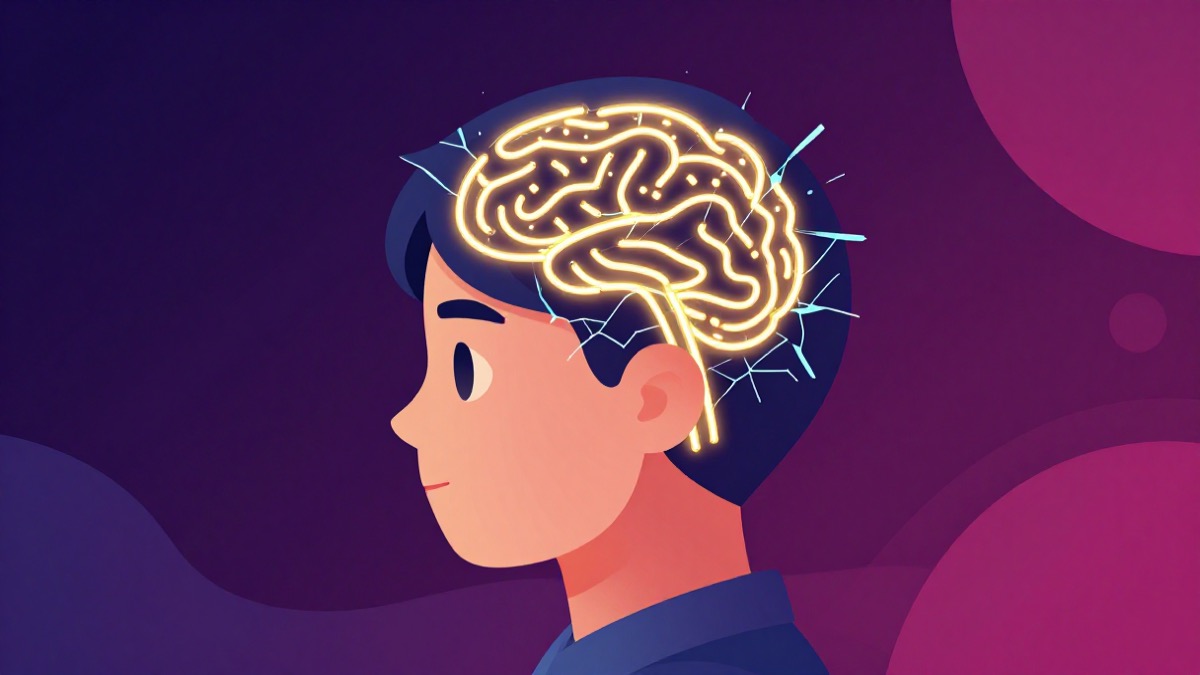
Flow state, first defined by psychologist Mihaly Csikszentmihalyi in the 1990s, is a mental state of complete absorption in a challenging but manageable task. During flow, the brain enters a highly efficient mode:
- Prefrontal cortex activity decreases (transient hypofrontality) — you stop second-guessing yourself
- Dopamine and norepinephrine spike — the brain’s reward and attention systems fire simultaneously
- Alpha and theta brainwaves dominate — associated with relaxed alertness and creative insight
- Perceived time distorts — hours feel like minutes
The result? Performance that can be up to 5x higher than your baseline, according to research by McKinsey. Memory consolidation is enhanced, creativity expands, and motivation becomes intrinsic rather than forced.
This isn’t just philosophy — it’s measurable neuroscience. And for ADHD learners, this neurochemical cocktail maps directly onto what the ADHD brain craves.
Why ADHD Brains Are Secretly Designed for Flow
ADHD is often described as a deficit of attention. But this misses the full picture. ADHD is actually a dysregulation of attention — people with ADHD can focus intensely on stimulating, rewarding tasks while struggling with boring or repetitive ones. This phenomenon is called hyperfocus, and it’s the ADHD version of flow state.
The Dopamine Connection
ADHD brains have chronically lower baseline dopamine levels. This is why stimulant medications (which boost dopamine) are effective treatments. But here’s the key insight: flow state naturally floods the brain with dopamine. When an ADHD person finds the right task at the right challenge level, their brain essentially self-medicates through the neurochemistry of flow.
Research from the Journal of Attention Disorders has found that ADHD individuals who regularly experience hyperfocus report significantly higher wellbeing, productivity, and academic achievement — not despite their ADHD, but because of how they channel it.
The Challenge-Skill Balance
Csikszentmihalyi identified the “flow channel” as the sweet spot between challenge and skill:
- Too easy → boredom (ADHD brains disengage immediately)
- Too hard → anxiety (ADHD brains freeze or flee)
- Just right → flow (ADHD brains lock in and go deep)
The challenge for ADHD learners is that this window is narrower than for neurotypical people. You need precise calibration. That’s exactly where AI-powered adaptive learning tools — like Flaaash — shine: they continuously adjust difficulty in real time to keep you in the flow channel.
The 7 Flow Triggers That Work Specifically for ADHD Brains
Flow state doesn’t happen by accident. Researchers have identified specific “flow triggers” — environmental and cognitive conditions that make flow more likely. Here are the seven most powerful ones for ADHD learners:
1. Clear, Specific Goals
Vague goals kill ADHD motivation. Instead of “study for the exam,” define: “Complete 30 flashcards on Chapter 4 vocabulary in 20 minutes.” The brain needs a specific target to lock onto. Use the SMART framework (Specific, Measurable, Achievable, Relevant, Time-bound) for every study session.
2. Immediate Feedback Loops
The ADHD brain requires near-instant feedback to stay engaged. This is why video games are so captivating — every action has an immediate response. Apply this to learning: use adaptive quiz apps, check answers immediately, track streaks and progress in real time. The moment feedback delays, attention wanders.
3. High Stakes or Novelty
ADHD brains are novelty-seeking by nature (driven by the dopamine system). Introduce novelty deliberately: study in a new location, use a different format (podcast instead of text), gamify the content, or add a time constraint. Stakes also help — study with a friend, create a deadline, or commit publicly to a goal.
4. Sensory Environment Control
This is the most underestimated trigger. ADHD brains are highly sensitive to their environment. For flow, you need:
- Background noise: Brown or pink noise (not complete silence, not chaotic conversation)
- Temperature: Slightly cool (67-70°F / 19-21°C) — warmth induces drowsiness
- Lighting: Bright, blue-toned light for alertness (mimics morning sunlight)
- Single task: One window, one tab, one objective. No multitasking.
5. Physical State Priming
Flow is physical before it’s mental. Pre-session priming can dramatically increase your chances of entering flow:
- 5-10 minutes of movement (jumping jacks, walk, yoga) — releases BDNF, the brain’s growth factor
- Controlled breathing (4-7-8 pattern or box breathing) — calms the nervous system
- Cold water splash — triggers norepinephrine release
- No phone for 30+ minutes beforehand — gives your attention system time to reset
6. The 90-Minute Ultradian Rhythm
The human brain operates in natural 90-minute focus cycles (ultradian rhythms). For ADHD learners, working with these cycles (rather than fighting them) is transformative. Structure your study sessions in 90-minute blocks, followed by genuine 20-minute breaks. During breaks: move, eat if needed, avoid screens.
7. Emotional Safety
Flow requires psychological safety — the absence of fear of failure. ADHD learners often carry significant academic shame (“I’m stupid,” “I always lose focus”). This fear is incompatible with flow. Build emotional safety through: self-compassion practices, reframing mistakes as data, and starting with guaranteed wins before tackling harder material.
How Spaced Repetition Turbocharged Flow State for ADHD
Flow state gets you into deep work. Spaced repetition ensures that work actually sticks. When combined, they form the most powerful learning system available to the ADHD brain.
Spaced repetition algorithms (like the SM-2 algorithm used in many flashcard apps) show you material at precisely the moment you’re about to forget it. This keeps material perpetually in the “challenge-skill sweet spot” — not so fresh it’s trivial, not so distant it’s forgotten. This is inherently flow-promoting for ADHD brains.
Our deep dive on AI and spaced repetition for faster learning explains exactly how AI amplifies this effect — including research on optimal review intervals and how Flaaash’s adaptive system works.
For ADHD-specific strategies, our complete spaced repetition guide for ADHD learners covers common pitfalls and solutions tailored to the ADHD experience.
The Flow-to-Memory Pipeline: What Happens in Your Brain
When you learn in flow state, something remarkable happens in your brain’s memory architecture:
- Encoding: Information enters via heightened sensory attention (flow makes you notice more)
- Hippocampal activation: The memory formation center is supercharged by the emotional intensity of flow
- Norepinephrine tagging: High-arousal experiences get “tagged” as important — flow experiences literally become more memorable
- Sleep consolidation: What you learn in flow state consolidates more effectively during deep sleep
- Retrieval enhancement: Memories formed during emotional states are easier to retrieve in similar states (state-dependent memory)
This is why a single hour of genuine flow learning can outperform six hours of distracted, anxious study. The brain stores flow-state experiences differently — deeper, more integrated, more accessible.
Building Your ADHD Flow State Practice: A Weekly Framework
Knowing the theory is one thing. Building a sustainable practice is another. Here’s a practical weekly framework for ADHD learners:
Daily (15 minutes, non-negotiable)
- Morning: 5 minutes of breathing + intention-setting for the day’s learning goal
- Evening: 10 minutes of spaced repetition review (Flaaash, Anki, or similar)
3x Per Week (90-minute deep sessions)
- Prepare your environment (noise, temperature, lighting, phone away)
- Prime your body (movement + breathing)
- Define the exact session goal (written down)
- Work for 90 minutes, no interruptions
- Immediate reward after completion
Weekly (30 minutes)
- Review what you learned
- Identify which sessions felt like flow and which didn’t
- Adjust your environment, timing, and topic difficulty for the following week
- Update your flashcard deck with key concepts
Digital Tools That Amplify Flow for ADHD Learners
The right tools can dramatically reduce friction and make flow more accessible:
For Focus & Environment
- Brain.fm or myNoise: AI-generated focus music tuned to brainwave entrainment
- Freedom or Cold Turkey: Website/app blockers for distraction-free sessions
- Structured: Calendar app designed for ADHD brains with visual time blocks
For Learning & Retention
- Flaaash: AI-powered adaptive learning with flashcards, quizzes, immersive podcasts, and flow-state features (meditation, hypnosis, photostimulation) specifically designed for ADHD learners — try it free
- Obsidian: Note-taking with bi-directional linking (great for building knowledge networks)
- Readwise: Spaced repetition for your reading highlights
For Body & Mind State
- Wim Hof Breathing App: Controlled breathing to prime focus
- Oak or Headspace: Short meditation for pre-session centering
- Oura Ring or Whoop: Track sleep quality, which directly impacts ADHD cognitive performance
Common Mistakes ADHD Learners Make (And How to Fix Them)
Mistake 1: Waiting for Motivation to Strike
ADHD brains rarely feel spontaneously motivated for non-immediately-rewarding tasks. Don’t wait for motivation — create the conditions. Set up your environment, start the timer, and let flow emerge. Action creates motivation, not the other way around.
Mistake 2: Multitasking During Study
Multitasking is incompatible with flow. Period. Every context switch costs 15-20 minutes of cognitive recovery time. ADHD brains are especially vulnerable because the executive function that manages task-switching is already compromised. One task, one screen, one goal.
Mistake 3: Overlong Sessions Without Breaks
Pushing through fatigue doesn’t create more flow — it destroys it. Respect your brain’s ultradian rhythms. A 90-minute deep session followed by a genuine break will always outperform 4 hours of grinding through mental fog.
Mistake 4: Ignoring Sleep
Sleep deprivation is catastrophic for ADHD performance. It directly impairs dopamine receptor sensitivity, making both ADHD symptoms and flow state harder to achieve. 7-9 hours of sleep isn’t optional — it’s the foundation of your entire learning system.
Mistake 5: Wrong Difficulty Level
Starting too easy → boredom → distraction. Starting too hard → frustration → shutdown. Always begin sessions with a brief warm-up at comfortable difficulty (5-10 minutes), then gradually increase the challenge. Adaptive learning apps (like Flaaash) handle this automatically.
FAQ: Flow State and ADHD
Can people with ADHD really achieve flow state?
Yes — and often more intensely than neurotypical people. The ADHD brain’s hyperfocus response is biologically linked to the same dopamine systems involved in flow. With the right conditions, ADHD brains can access deep flow states. Many people with ADHD describe hyperfocus as their superpower when properly directed.
How long does it take to enter flow state with ADHD?
It typically takes 10-20 minutes to enter flow state. For ADHD brains, this “ramp-up” period can feel agonizing — especially if there’s distraction. This is why environment setup and physical priming are so critical. Once you’re in flow, ADHD brains can sustain it for 90 minutes or more.
What’s the difference between ADHD hyperfocus and flow state?
Hyperfocus is the ADHD-specific manifestation of flow state. The key difference is intentionality: hyperfocus can happen spontaneously (often on the “wrong” thing — like video games or social media). Flow state is intentionally triggered through deliberate environmental and cognitive setup. The goal is to redirect the ADHD hyperfocus response toward your chosen learning objectives.
Does medication help or hurt flow state with ADHD?
Stimulant medication (Adderall, Ritalin, etc.) can make it easier to enter flow by boosting dopamine baseline. However, some people find that medication actually makes hyperfocus harder to achieve — individual responses vary. The strategies in this article work both with and without medication. Always discuss medication questions with your doctor.
What’s the best time of day for ADHD flow state?
Most ADHD brains perform best in late morning (9 AM–12 PM) when cortisol is naturally higher. However, many ADHD individuals are evening people — experiment with your own chronotype. Track your energy and focus levels across the day for two weeks to find your personal peak window.
Conclusion: Your ADHD Brain Is Not Broken
Flow state isn’t a luxury reserved for “normal” brains. It’s a fundamental human capacity — and the ADHD brain, with its unique neurochemistry and hyperfocus potential, may actually have an advantage when it comes to depth of flow experience.
The key is understanding your brain, setting up the right conditions, and using the right tools. Combine flow triggers with spaced repetition, consistent sleep, and AI-adaptive learning, and you have a system that doesn’t just compensate for ADHD — it leverages it.
Ready to put this into practice? Flaaash is built specifically for ADHD learners who want to learn faster, retain more, and actually enjoy the process. From adaptive flashcards to flow-state meditation sessions, it’s the learning platform designed around how your brain actually works.
What flow-state strategy are you going to try first? Let us know in the comments below.