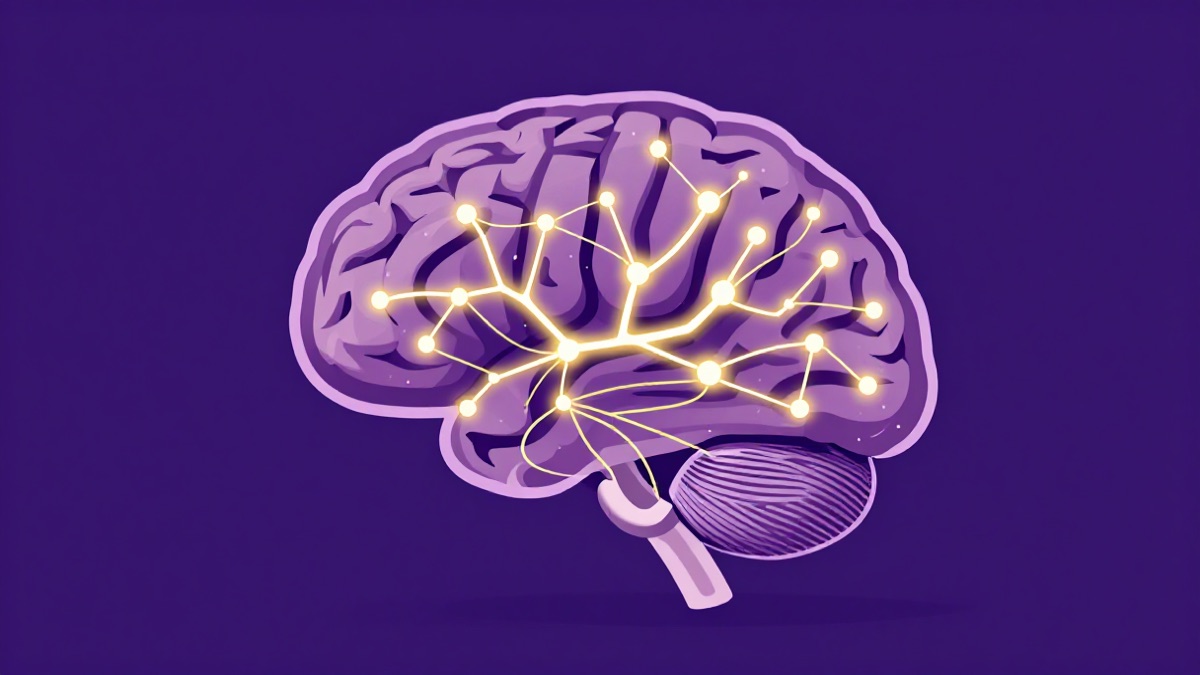
What if everything you believed about your brain being fixed was wrong? Science has proven that your brain can change, grow, and rewire itself at any age. This process is called neuroplasticity — and it is the biological foundation of all effective learning.
Whether you are studying a new language, building a skill, or trying to retain complex information, understanding neuroplasticity will fundamentally change how you approach learning. In this guide, we break down the science and show you exactly how to use it for faster, deeper learning.
What Is Neuroplasticity? The Science Behind Brain Rewiring
Neuroplasticity (also called brain plasticity) refers to the brain’s ability to reorganize itself by forming new neural connections throughout life. Every time you learn something new, your neurons — the brain’s nerve cells — form new synaptic connections. Repeat the experience, and those connections strengthen. Stop using them, and they weaken.
This process follows a principle famously summarized by neuroscientist Donald Hebb: “Neurons that fire together, wire together.”
There are two main types of neuroplasticity:
- Structural plasticity: Physical changes to the brain’s structure, such as growing new neurons (neurogenesis) or strengthening synaptic connections.
- Functional plasticity: The brain’s ability to move functions from a damaged area to an undamaged one — especially important after injury.
For learners, structural plasticity is the key mechanism. Every time you study, practice, or recall information, you are literally reshaping your brain.
Why Neuroplasticity Matters for Faster Learning
Traditional education treats the brain like a container — fill it with facts and hope they stick. But neuroscience tells a different story. Learning is not about passive absorption; it is about active construction of neural pathways.
This means:
- You can get smarter at any age. Neuroplasticity does not stop after childhood. Adults can form new neural connections well into their 70s and beyond.
- Practice and retrieval beat passive reading. Active recall (testing yourself) triggers stronger synaptic connections than re-reading.
- Emotion and novelty accelerate learning. The brain prioritizes information that feels emotionally significant or surprising — because novelty signals “this matters.”
- Sleep consolidates memory. During sleep, the brain replays experiences and transfers short-term memories into long-term storage.
Understanding these mechanisms lets you design a learning strategy that works with your brain instead of against it.
5 Science-Backed Strategies to Leverage Neuroplasticity
1. Spaced Repetition
Spaced repetition is one of the most powerful tools for neuroplasticity-driven learning. Instead of cramming, you review material at increasing intervals — just before you would forget it. This forces the brain to retrieve and reconstruct memories, which strengthens the neural pathways every time.
Research shows spaced repetition can improve retention by up to 200% compared to massed practice (cramming). Apps like Flaaash use AI-powered spaced repetition to automatically schedule your reviews at optimal intervals.
2. Active Recall and Retrieval Practice
The act of trying to remember something is itself a learning event. Every retrieval attempt strengthens the neural path to that memory. This is why testing yourself is more effective than re-reading notes.
Techniques include flashcards, practice quizzes, and the Feynman Technique (explaining concepts in simple language). Flaaash’s AI flashcard generator automates this process — turning any text into ready-to-study flashcards in seconds.
3. Interleaving Different Subjects
Mixing different topics or skills in a single study session (instead of focusing on one at a time) forces your brain to make more connections between concepts. This is called interleaving, and while it feels harder in the moment, the long-term retention gains are significant.
Studies show interleaved practice can lead to 43% better performance on tests compared to blocked practice.
4. Sleep and Recovery
Learning does not happen only while you are awake. During deep sleep and REM sleep, the brain consolidates memories, prunes unnecessary connections, and integrates new information into existing knowledge structures.
Tips for optimizing sleep for neuroplasticity:
- Get 7–9 hours per night consistently
- Avoid screens 1 hour before bed (blue light disrupts melatonin)
- Review material just before sleep — the brain processes it during the night
- Try a short 20-minute nap after intense study sessions
5. Mindfulness, Meditation, and Flow States
Mindfulness meditation has been shown to increase gray matter density in areas of the brain associated with learning, memory, and self-awareness. Even 10–15 minutes per day can produce measurable structural changes over weeks.
Flow states — periods of deep, effortless focus — are especially powerful for neuroplasticity. In flow, the brain releases dopamine and norepinephrine, which enhance memory encoding and accelerate skill acquisition.
Flaaash includes guided flow state sessions, binaural beats, and focus meditations specifically designed to prime your brain for deep learning.
Neuroplasticity and ADHD: Rewiring the Distracted Brain
For people with ADHD, neuroplasticity offers particularly exciting possibilities. ADHD is characterized by differences in dopamine signaling and executive function — but these are not fixed deficits. They are patterns that can be reshaped.
Research shows that:
- Cognitive training can improve working memory and attention in ADHD brains
- Regular aerobic exercise increases dopamine and BDNF (Brain-Derived Neurotrophic Factor), supporting neuroplasticity
- Gamified learning environments trigger dopamine release, improving engagement and retention in ADHD learners
Flaaash was built with ADHD learners in mind. Its micro-learning format, gamified progress, and adaptive AI ensure that learning sessions are short, engaging, and effective — working with the ADHD brain’s natural reward system rather than fighting it.
👉 Try Flaaash free — designed for fast, ADHD-friendly learning.
The Role of AI in Neuroplasticity-Based Learning
Artificial intelligence is transforming how we apply neuroplasticity principles at scale. Traditional learning tools use a one-size-fits-all approach. AI-powered tools adapt to your individual memory patterns, learning pace, and cognitive strengths.
How AI enhances neuroplasticity-driven learning:
- Adaptive spaced repetition: AI analyzes your performance and schedules reviews at the exact moment your brain is about to forget.
- Personalized content generation: AI creates flashcards, summaries, and quizzes tailored to your current knowledge level.
- Real-time feedback: Immediate feedback reinforces correct neural patterns before incorrect ones consolidate.
- Multimodal learning: AI generates audio, visual, and text-based content — activating multiple brain regions simultaneously for deeper encoding.
Flaaash combines all of these capabilities. Its AI engine continuously models your learning curve, identifies weak spots, and adapts the content to maximize your neuroplasticity-driven growth.
How to Build a Neuroplasticity-Optimized Learning Routine
Ready to put the science into practice? Here is a daily learning routine designed to maximize neuroplasticity:
- Morning (15–20 min): Review flashcards with spaced repetition (Flaaash). Focus on active recall, not passive reading.
- Midday (10 min): Brief meditation or flow state session to reset attention and boost dopamine.
- Afternoon (30–45 min): Deep learning session with interleaved topics. Use the Pomodoro technique (25 min focused + 5 min break).
- Evening (10 min): Review the day’s material one final time before sleep to prime memory consolidation.
- Night: Prioritize 7–9 hours of quality sleep. This is when the real wiring happens.
Consistency is key. Neuroplasticity is built through repetition over time — not through marathon sessions. Small daily habits outperform occasional cramming every time.
Frequently Asked Questions About Neuroplasticity and Learning
At what age does neuroplasticity peak?
Neuroplasticity is highest during childhood and adolescence, but it never stops entirely. Adults retain significant capacity for brain change throughout their lives. The key difference is that adult learning typically requires more repetition and deliberate practice to achieve the same structural changes.
Can neuroplasticity improve memory?
Yes. By using techniques like spaced repetition, active recall, and adequate sleep, you can strengthen the neural pathways associated with memory encoding and retrieval. Over time, these habits create lasting structural improvements in memory capacity.
How long does it take to rewire the brain?
It depends on the complexity of the skill or habit. Simple neural changes can occur within days of consistent practice. More complex rewiring — like learning a new language or changing a deep-seated habit — typically takes weeks to months of consistent effort. Studies suggest 66 days on average to form a new habit (not the oft-cited 21 days).
Does exercise improve neuroplasticity?
Absolutely. Aerobic exercise is one of the most powerful triggers of BDNF (Brain-Derived Neurotrophic Factor), often called “Miracle-Gro for the brain.” Even 20–30 minutes of moderate cardio can increase BDNF levels and enhance neuroplasticity for hours afterward.
How does Flaaash use neuroplasticity principles?
Flaaash is built on four core neuroplasticity mechanisms: adaptive spaced repetition, active recall (AI flashcards and quizzes), multimodal content (audio, visual, text), and flow state optimization (focus sessions, binaural beats). Together, these create a learning environment that actively accelerates brain rewiring for faster, deeper retention.
Start Rewiring Your Brain Today
Neuroplasticity is not a metaphor — it is a measurable, biological process that you can actively direct. Every study session, every flashcard, every night of good sleep is an investment in the physical structure of your brain.
The question is not whether your brain can change. It already is. The question is whether you are directing that change intentionally.
Flaaash gives you the tools to do exactly that: AI-powered flashcards, adaptive spaced repetition, flow state sessions, and a learning engine that adapts to your unique cognitive profile.
🚀 Start your free trial on Flaaash — and start rewiring your brain today.
Conclusion: Your Brain Is Built to Change
Neuroplasticity means every study session physically rewires your brain. The key is consistency: small, well-spaced practice beats occasional marathon sessions. Give your brain the right input, and it will adapt faster than you think.
If you are learning a language, SuperNeat applies the same science to Scottish and Irish Gaelic: smart flashcards, spaced repetition, and immersive audio to get you speaking faster.
Leave a Reply