
Blog

  • How to Memorize Numbers With the Major System

    How to Memorize Numbers With the Major System

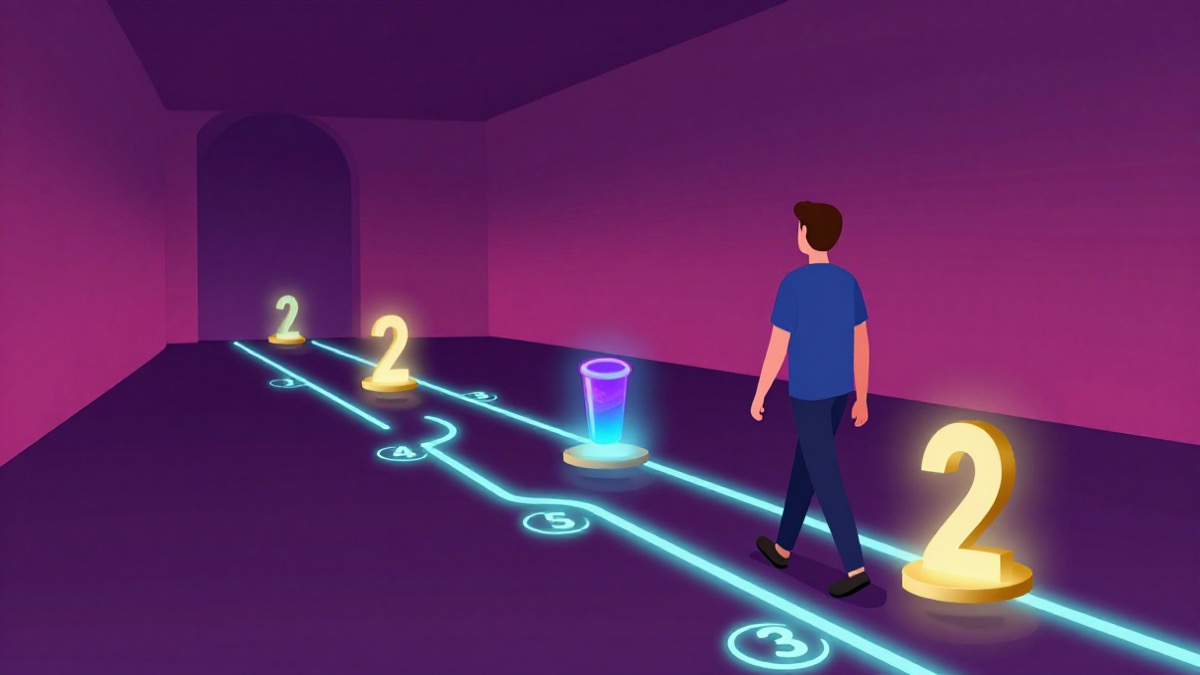
    Numbers are the hardest thing for most people to memorize: a phone number, a PIN, a list of dates, a string of statistics. The human brain is not built for arbitrary digits — but it is excellent at images, stories, and sounds. The major system exploits that gap by converting every number into a sound, then a word, then a vivid image. It is the same trick that memory competitors use to recall hundreds of digits, and you can learn a usable version of it in a single sitting.

    To memorize numbers with speed and reliability, the major system turns any digit sequence into vivid, memorable images.
    (more…)

  • Memory Palace: The Ancient Technique That Still Works in 2026

    Memory Palace: The Ancient Technique That Still Works in 2026

    Some memory techniques are gimmicks. The memory palace — also called the method of loci — is not. It is a technique with roots in ancient Greece, a documented history spanning two millennia, and a scientific evidence base that has only strengthened with modern research. And far from being obsolete in an age of search engines and note apps, it remains one of the most reliable ways to memorize ordered information you actually need to hold in your head.

    The memory palace technique, also called the method of loci, is one of the most powerful and oldest memory systems known.

    (more…)

  • Cramming vs Spacing: What the Research Really Shows

    Cramming vs Spacing: What the Research Really Shows

    Cramming vs spacing is a debate the research has settled, and the answer is emphatic: spacing preserves memory while cramming wastes most of it.

    The night before the exam, the books come out, the coffee goes on, and the panic sets in. Everyone — even the most disciplined student — has crammed at some point. And cramming does work, in one narrow sense: it gets information into your head for the next few hours. But the research is unambiguous about what that success is worth: almost nothing by the time the grade matters, and almost nothing permanent. The science-backed alternative is spacing — and the gap between the two is one of the largest and best-replicated in all of learning psychology.

    The debate of cramming vs spacing is effectively settled by research, and the evidence strongly favors spacing for durable memory.

    (more…)

  • The Testing Effect: How Low-Stakes Quizzes Boost Grades

    The Testing Effect: How Low-Stakes Quizzes Boost Grades

    Most students dread tests. But a half-century of research has overturned a core assumption: tests are not only a way to measure learning — they are one of the most powerful ways to create it. The testing effect is the finding that retrieving information during a test strengthens memory far more than restudying the same material, and it works whether or not the test contributes a single point to your grade.

    (more…)

  • The Generation Effect: Create It and You Will Remember It

    The Generation Effect: Create It and You Will Remember It

    Here is a memory experiment you can run on yourself right now. Read these eight words: cup, moon, river, flame, song, door, leaf, star. Now read these eight clues to the same kind of words: c___, m___, r___, f___, s___, d___, l___, s___. Later, you will remember the second list better — even though each word appears in both, and you never heard the second list’s words read aloud. That is the generation effect: information you produce yourself is remembered far better than information you only read. It is one of the most robust and useful findings in learning science.

    (more…)

  • Why Concrete Examples Beat Abstract Explanations When Learning

    Why Concrete Examples Beat Abstract Explanations When Learning

    Abstract definitions feel clean. A physics textbook’s formula, a psychology chapter’s jargon, a finance course’s “efficiency” — all can be summarized in a crisp sentence. Yet research is clear that memorizing the abstraction alone produces thin, fragile understanding. Concrete examples — specific cases, vivid instances, worked problems — are what anchor abstract principles in memory and let you actually use them. This is not folklore; it is a well-documented finding in the science of learning.

    Concrete examples beat abstract explanation in almost every study context, and understanding why changes how you learn.

    (more…)

  • Dual Coding: Learn Faster With Words and Pictures Together

    Dual Coding: Learn Faster With Words and Pictures Together

    Why does a well-drawn diagram make a chapter click? Because your brain processes verbal and visual information through separate channels — and material that uses both gets encoded twice. That is the premise of dual coding theory, proposed by Allan Paivio in 1971, and it remains one of the most practical insights in learning science.

    (more…)

  • Elaborative Interrogation: Ask Why to Remember More

    Elaborative Interrogation: Ask Why to Remember More

    There is a question worth asking after almost everything you read: “Why is this true?” This simple habit — called elaborative interrogation by researchers — turns passive reading into active understanding and produces reliable gains in long-term memory, often with just a few extra seconds of effort per fact.

    (more…)

  • The Pomodoro Technique for Studying: A Practical Guide

    The Pomodoro Technique for Studying: A Practical Guide

    When your study sessions dissolve into phone-checking and half-reading, the fix is often not more discipline but better structure. The Pomodoro Technique — 25 minutes of focused work followed by a 5-minute break — remains one of the most popular focus systems among students for a simple reason: it works, and it is almost embarrassingly easy to start.

    (more…)

  • How to Build a Spaced Repetition Schedule That Actually Works

    How to Build a Spaced Repetition Schedule That Actually Works

    Spaced repetition is arguably the most validated technique in learning science — reviews spread over increasing intervals can cut total study time dramatically while boosting retention. Yet most people who “try spacing” quit within weeks. The problem is rarely the method; it is the schedule. Here is how to build one you will actually keep.

    Spaced repetition schedule is the single most effective system for making knowledge stick, and this guide shows you how to build one that works day after day.

    (more…)