Blog

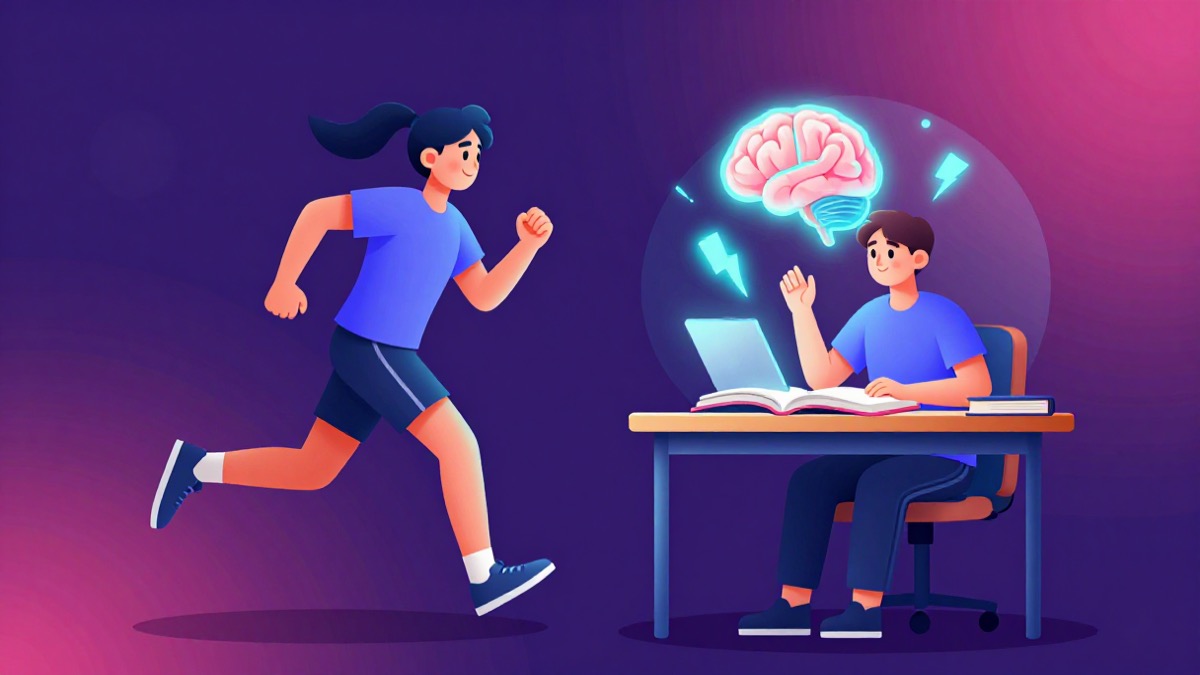
  • Exercise Before Studying: The Brain Boost Backed by Research

    Exercise Before Studying: The Brain Boost Backed by Research

    Exercise is usually sold as the thing that steals study time. An hour at the gym is an hour not spent with the books — or so the anxious student reasons, and skips the workout before exams. The research says this reasoning gets it exactly backwards: properly timed physical exercise is one of the most reliable, free, side-effect-free cognitive enhancers available, and it measurably improves the very sessions you sacrifice for.

    Exercise before studying measurably boosts both memory and attention, and pairing the two yields a striking academic advantage.
    (more…)

  • Your Phone Is Costing You 20 Points: Distraction Research Explained

    Your Phone Is Costing You 20 Points: Distraction Research Explained

    It sits face-down beside your books, promising not to interrupt. It interrupts anyway. The research on smartphone distraction during study is among the most consistent — and most personally costly — findings in educational psychology, and its scale surprises even the students who live it. If you study with your phone within reach, this is what it is doing to you.

    (more…)

  • Your Attention Span Is Not Broken – Here Is the Real Problem

    Your Attention Span Is Not Broken – Here Is the Real Problem

    “I can’t focus anymore. My attention span is destroyed.” It is the most common self-diagnosis of the digital age, repeated by students who abandon a chapter after four minutes and conclude their brains are damaged goods. The diagnosis is wrong — and the error matters, because you cannot fix a problem you have misidentified. Your capacity for sustained attention is almost certainly intact. What has changed is something else entirely.

    Your attention span is not actually broken, and learning what is really going on is the first step to taking it back.

    (more…)

  • Deep Work for Students: Study Less, Achieve More

    Deep Work for Students: Study Less, Achieve More

    The most valuable study skill of the decade is not a memory trick — it is the ability to concentrate without interruption on a demanding task for an extended period. Cal Newport calls this deep work, and for students it changes the arithmetic of studying entirely: two hours of genuine deep work routinely outproduce six hours of fragmented, distracted effort. Here is what deep work means in practice and how to build it into student life.

    Deep work for students is the ability to focus without distraction, and it is the highest-leverage skill in modern academics.

    (more…)

  • Music While Studying: What Science Says About Focus

    Music While Studying: What Science Says About Focus

    Few study habits are as contested as music. Some students swear by a playlist; others need dead silence. The science, helpfully, does not force a single answer — it explains when music helps, when it hurts, and which kinds of tasks tolerate it. Here is what research actually supports.

    Music while studying is one of the most debated of all study habits, and science gives a nuanced, useful answer.

    (more…)

  • Digital vs Paper Notes: Which Helps You Remember More?

    Digital vs Paper Notes: Which Helps You Remember More?

    Every student eventually faces the choice: laptop open, or notebook out? The answer matters more than it seems. How you take notes shapes how deeply you process the material — and the research on this question is more nuanced than either camp’s evangelists admit. Here is what the evidence actually shows, and how to choose for your situation.

    Digital vs paper notes is a genuinely contested choice, and the research offers a balanced answer that helps you decide.

    (more…)

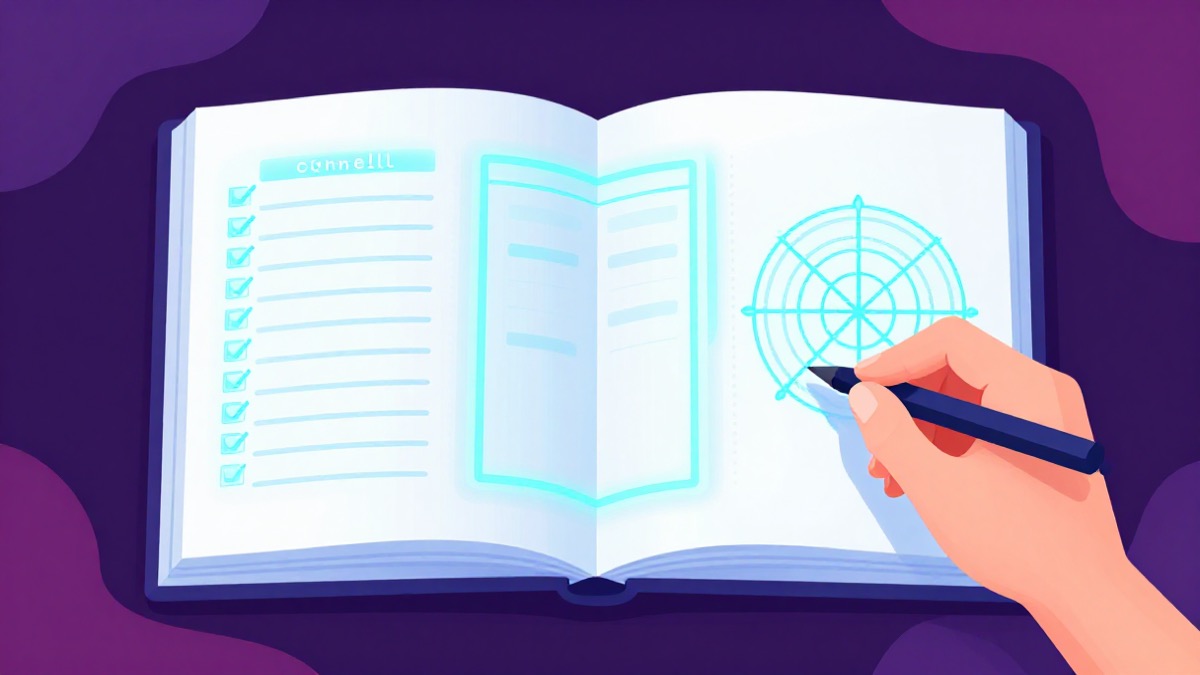
  • Cornell, Outline, Mind Map: Note-Taking Methods Compared

    Cornell, Outline, Mind Map: Note-Taking Methods Compared

    Your notes are the first draft of your study system — the raw material every other technique acts on. Yet most notes are built by muscle memory rather than choice: a page of near-verbatim text copied because that is what the last notes looked like. The evidence, and the practical experience of top students, is that the method you choose shapes how much you understand and retain, not just how neat the page is. Here is how the big methods compare, and when to use each.

    Note-taking methods compared side by side reveal that the best system depends on your subject, your goals, and how you review.

    (more…)

  • The Ideal Exam Prep Timeline: 8 Weeks Out to Test Day

    The Ideal Exam Prep Timeline: 8 Weeks Out to Test Day

    Exams are won in the weeks before, not the night before. A well-structured study timeline is the difference between walking into the room calm and walking in panicked — but the right structure is not “study a lot”; it is a deliberate build: learn early, consolidate in the middle, and shift hard to retrieval in the final stretch. Here is a proven eight-week arc you can adapt to any exam, at any distance.

    A structured exam prep timeline is the difference between panic and control in the final weeks before a test.

    (more…)

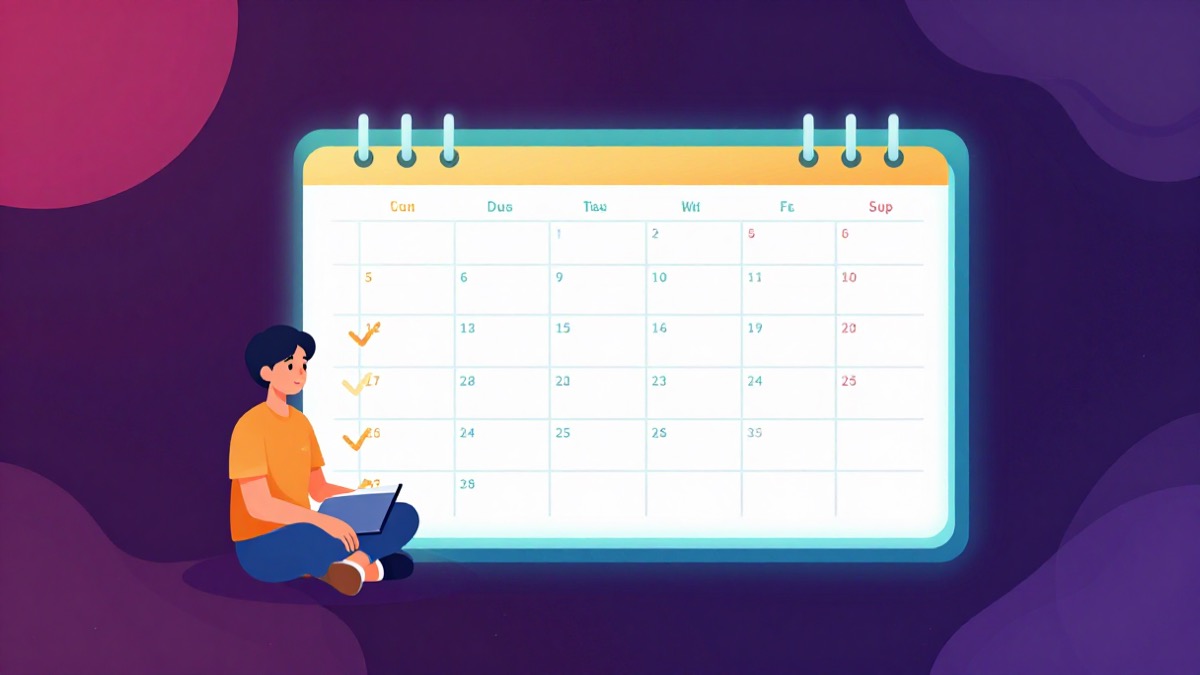
  • How to Make a Study Plan You Will Actually Follow

    How to Make a Study Plan You Will Actually Follow

    Most study plans fail not because they are wrong but because they are unusable — too vague to start, too ambitious to sustain, or too rigid to survive a single bad day. A plan you will actually follow is built from the opposite principles: it is small enough to begin, honest about your real time, and flexible enough to absorb life’s shocks. Here is how to design one.

    (more…)

  • Mnemonics for Medical Students: Methods That Survive Exams

    Mnemonics for Medical Students: Methods That Survive Exams

    Medicine throws more facts at you than any other degree, and a startling fraction of them are arbitrary: the branches of a nerve, the order of a pathway, the list of causes, the side effects of a drug. Rote memorization drowns in this volume. Mnemonics — memory devices that turn arbitrary lists into ordered, imageable, sing-song form — are one of the oldest and most effective tools a medical student has, and they are the reason generations of clinicians still mutter acronyms in corridors.

    Mnemonics for medical students are essential survival tools, because medical facts are overwhelmingly arbitrary and demand reliable recall.

    (more…)