
If you have ADHD, you know the struggle: you learn something today, and it’s completely gone by tomorrow. Your brain seems to have a built-in delete button for everything you study. But there’s good news: spaced repetition is a powerful technique backed by neuroscience that can help you remember everything you learn.

What is Spaced Repetition?
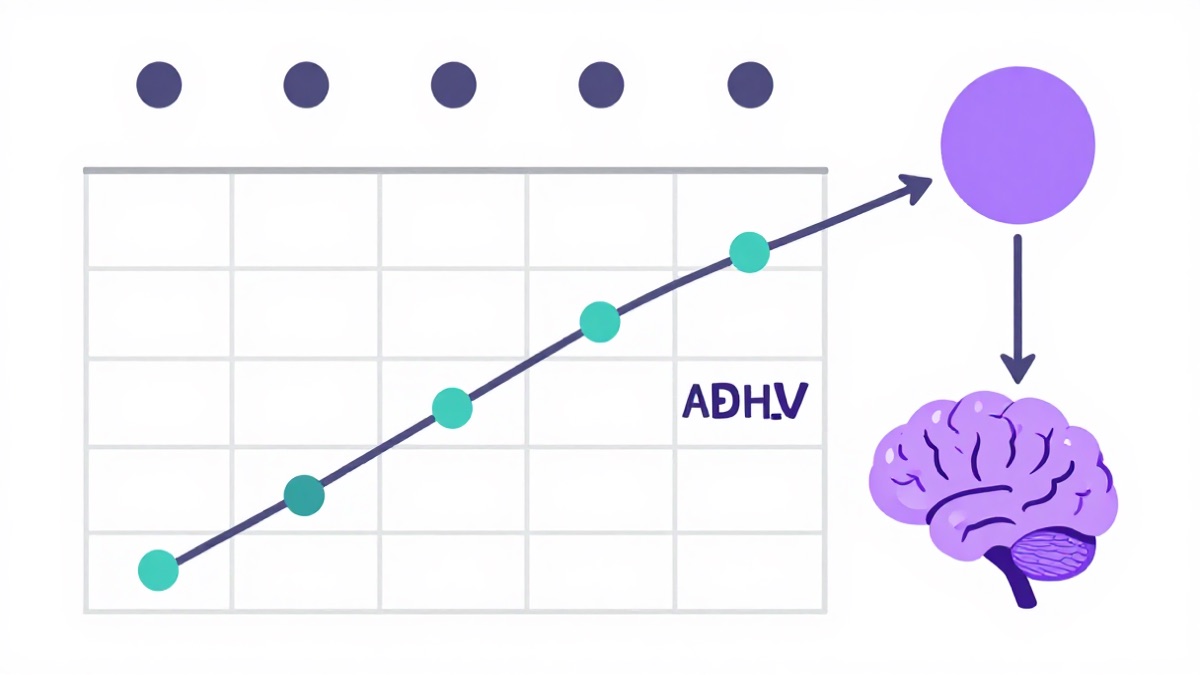
Spaced repetition is a learning technique that involves reviewing information at increasing intervals over time. Instead of cramming everything in one study session, you revisit material just as you’re about to forget it.
The concept isn’t new. German psychologist Hermann Ebbinghaus first discovered the forgetting curve in 1885. He found that we naturally lose information over time – but each review strengthens the memory trace.
Here’s how it works:
- Day 1: Learn new information
- Day 2: First review
- Day 4: Second review
- Day 7: Third review
- Day 14: Fourth review
Each successful recall makes the memory stronger and extends the time until you need to review again.
Why Spaced Repetition Works So Well for ADHD
ADHD brains are unique. They thrive on novelty and struggle with boring, repetitive tasks. Here’s why spaced repetition is a perfect match:
1. Variable Intervals Keep Your Brain Engaged
Traditional studying uses the same boring routine. Spaced repetition creates variable intervals that keep your brain alert and engaged. You’re never quite sure when the next review will be, which maintains interest.
2. Active Recall is More Stimulating
Instead of passively re-reading notes (which is almost useless for ADHD brains), spaced repetition uses active recall. You actively pull information from memory, which creates stronger neural pathways.
Research from Carnegie Mellon University shows that active recall can improve retention by up to 150% compared to passive review.
3. Builds Momentum and Dopamine
As you complete reviews and see your progress, you get small dopamine hits. This positive feedback loop motivates you to keep going – exactly what ADHD brains need.
4. Compensates for Working Memory Issues
ADHD often comes with working memory challenges. Spaced repetition externalizes your memory by using flashcards or apps, reducing cognitive load.

The Science Behind Spaced Repetition
Spaced repetition works because of a phenomenon called long-term potentiation. Here’s what happens in your brain:
- Initial learning creates a weak neural connection
- First recall strengthens that connection slightly
- Subsequent recalls make the connection increasingly strong
- After several reviews, the memory becomes nearly permanent
This is why scientists call spaced repetition one of the most effective learning techniques available. A meta-analysis of 200+ studies found that spaced practice is up to 50% more effective than massed practice (cramming).
How to Get Started with Spaced Repetition
Step 1: Choose Your Tool
The most popular option is Anki, a free flashcard app that uses spaced repetition algorithms. Other options include:
- Quizlet – Great for beginners
- Brainscape – Focus on confidence-based repetition
- Flaaash – AI-powered spaced repetition specifically designed for ADHD learners
Step 2: Create Your Flashcards
Follow these principles for effective flashcards:
- One concept per card – Don’t overload
- Use your own words – Writing helps retention
- Include context – Connect to existing knowledge
- Add images – Visual cues enhance memory
Step 3: Start Small
Many learners make the mistake of adding too many cards too quickly. Start with 10-20 new cards per day maximum. Quality over quantity!
Common Mistakes to Avoid
Mistake #1: Cramming Everything at Once
Adding 500 cards in one weekend will overwhelm you. Spread it out!
Mistake #2: Passive Review Only
Don’t just look at the answer – actually try to recall it. Active recall is essential.
Mistake #3: Ignoring Difficult Cards
Difficult cards need MORE reviews, not fewer. The algorithm handles this automatically.
Mistake #4: Inconsistent Practice
Missing days breaks the spaced repetition effect. Aim for daily 15-20 minute sessions.
Advanced Tips for ADHD Learners
Pair your practice with flow state techniques to turn review sessions into deeply focused, enjoyable moments.
Combine with Other Techniques
Spaced repetition works even better when combined with:
- Chunking – Breaking information into smaller groups
- The Feynman Technique – Teaching what you learn
- Mind mapping – Visual organization of concepts
- Interleaving – Mixing different topics in one session
Use Multi-Modal Learning
Add audio recordings, images, and even movement to your flashcards. ADHD brains process multiple sensory inputs better than single-channel information.
Leverage AI for Personalization
Modern AI-powered platforms like Flaaash can adapt to your learning pace, interests, and ADHD-specific challenges. The algorithm adjusts automatically based on your performance.
FAQ: Spaced Repetition for ADHD
Curious how AI can handle the scheduling for you? See our guide to AI-powered spaced repetition.
How long does it take to see results?
Most people notice improvements within 1-2 weeks. After a month, you’ll remember significantly more than with traditional studying.
How many cards should I review daily?
Start with 20-30 cards per day (including new and review cards). As your deck grows, aim for 15-20 minutes of daily review.
Can spaced repetition help with ADHD medication?
Absolutely! Spaced repetition works with or without medication. It provides structure that ADHD brains need, regardless of medication status.
What’s the best time of day to study?
For ADHD brains, morning (after medication kicks in, if applicable) or early afternoon typically works best. Avoid late evening when focus naturally decreases.
How long should I use each card?
The algorithm handles this automatically. When you see a card, try to recall it within 10 seconds. If you know it well, tap “Easy” – if struggling, tap “Hard.”
Conclusion
Explore more neuroscience-backed methods like neuroplasticity-based learning to keep improving.
Spaced repetition is one of the most effective learning techniques available, especially for ADHD brains. By working with your brain’s natural forgetting curve instead of fighting it, you can:
- Remember more with less effort
- Build consistent study habits
- Leverage your brain’s reward system
- Create long-lasting knowledge
Combined with AI-powered tools like Flaaash, you can create a personalized learning system that adapts to your unique brain. Stop fighting your ADHD – start working with it!
Ready to accelerate your learning? Try Flaaash.app – the AI-powered learning platform that adapts to your brain, combining spaced repetition with neuroscience-based techniques specifically designed for ADHD learners.
If you are learning a language, SuperNeat applies the same science to Scottish and Irish Gaelic: smart flashcards, spaced repetition, and immersive audio to get you speaking faster.
Leave a Reply