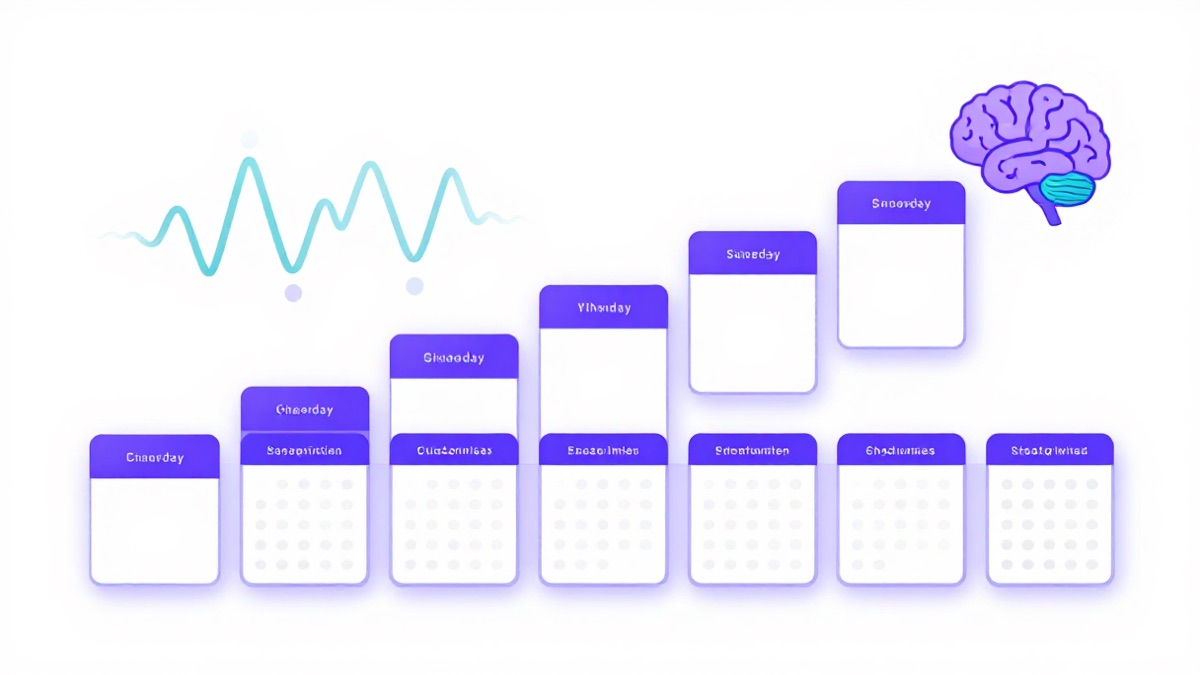
In an era where information is abundant but attention is scarce, the ability to learn efficiently has become one of the most valuable skills. Among the various learning techniques available, spaced repetition stands out as one of the most scientifically validated methods for long-term retention and mastery of any subject.
What is Spaced Repetition?
Spaced repetition is a learning technique that incorporates increasing intervals of time between subsequent review of previously learned material. Rather than cramming information all at once, spaced repetition leverages the psychological spacing effect to move information from short-term to long-term memory.

The Science Behind the Method
The concept of spaced repetition is rooted in the work of German psychologist Hermann Ebbinghaus, who discovered the “forgetting curve” in the 1880s. His research showed that memory decays exponentially over time unless information is actively reviewed. The key insight: reviewing information at strategically increasing intervals dramatically slows this decay.
Modern neuroscience has confirmed Ebbinghaus’s findings. When we review information at the optimal moment—just before we’re about to forget it—the brain strengthens the neural pathways associated with that memory, making future retrieval easier and more durable.
The Spacing Effect
The spacing effect describes the phenomenon where information is better remembered if exposure to it is distributed over a period of time rather than presented all at once (massed practice). Research consistently shows that spaced practice can improve long-term retention by 50-100% compared to cramming.
How Spaced Repetition Works
The Forgetting Curve
Our brains are designed to forget information that isn’t regularly used. The forgetting curve shows that:
- After 1 day: We remember approximately 40% of what we learned
- After 1 week: We remember approximately 20%
- After 1 month: We remember approximately 10%
Spaced repetition interrupts this forgetting process by scheduling reviews at optimal intervals.
The Optimal Review Schedule
The spaced repetition algorithm determines when to show you information based on your performance:
- First review: 1 day after initial learning
- Second review: 3 days later
- Third review: 1 week later
- Fourth review: 2 weeks later
- Fifth review: 1 month later
- Subsequent reviews: Increasing intervals (2 months, 4 months, 8 months, etc.)
If you successfully recall information, the interval increases. If you struggle or fail to recall, the interval resets to a shorter period.
Active Recall vs. Passive Review
Spaced repetition works best when combined with active recall—the practice of retrieving information from memory without looking at the source material. This is fundamentally different from passive review methods like re-reading notes or highlighting text.
Active recall strengthens memory because:
- It forces the brain to retrieve information, strengthening neural pathways
- It reveals gaps in understanding that passive review hides
- It creates a sense of difficulty that signals the brain to prioritize the information
The Psychology of Spaced Repetition
Cognitive Load Theory
Cognitive load theory suggests that our working memory has limited capacity. Spaced repetition optimizes this by:
- Breaking information into manageable chunks
- Reviewing information when cognitive resources are fresh
- Preventing overload through distributed practice
Metacognition and Self-Regulation
Spaced repetition systems encourage metacognition—thinking about your thinking. By tracking your performance and adjusting review schedules, you develop better awareness of your learning process and can make informed decisions about study strategies.
The Testing Effect
Research shows that testing yourself on material improves retention more than additional study time. Spaced repetition systems incorporate regular testing through flashcards and quizzes, leveraging the testing effect to maximize learning efficiency.
Practical Implementation
For ADHD learners, spaced repetition is especially effective — the structured rhythm works with your brain, not against it.
Creating Effective Flashcards
The quality of your flashcards directly impacts the effectiveness of spaced repetition. Here are best practices:
Card Design Principles:
- One concept per card: Keep cards focused and specific
- Clear, concise wording: Avoid ambiguity
- Use images when appropriate: Visual information is often easier to remember
- Contextual examples: Include real-world applications
- Progressive disclosure: Start simple, add complexity gradually
Common Mistakes to Avoid:
- Cards that are too long or complex
- Vague questions with multiple possible answers
- Information that can be guessed from the card design
- Cards that test trivial details instead of core concepts
Choosing the Right Tools
Several spaced repetition software (SRS) options are available:
Anki: The gold standard for customizable spaced repetition. Free on most platforms, with extensive community decks and add-ons.
Quizlet: User-friendly interface with gamification elements. Good for beginners, though the free version has limitations.
Memrise: Focused on language learning with video clips of native speakers.
Brainscape: Uses confidence-based repetition with a scientific approach to card creation.
Custom solutions: For specific needs, consider building your own system with tools like Notion, Obsidian, or custom scripts.
Building a Spaced Repetition Routine
Getting Started:
- Start small: Begin with 10-20 cards per day
- Be consistent: Review cards daily, even if just for 15 minutes
- Quality over quantity: Better to have fewer excellent cards than many mediocre ones
- Review before creating: Understand material before making cards
- Regular maintenance: Delete or modify cards that aren’t working
Long-term Success:
- Schedule dedicated review times (morning or evening often work best)
- Use commute time or waiting periods for quick reviews
- Combine with other learning techniques for complex subjects
- Track progress and adjust strategies as needed
Spaced Repetition Across Different Domains
Language Learning
Spaced repetition is particularly effective for language learning because it addresses the fundamental challenge of vocabulary retention. Studies show that learners using SRS can acquire vocabulary 2-3 times faster than traditional methods.
Best practices for language learning:
- Include example sentences, not just isolated words
- Add audio pronunciations when possible
- Group related vocabulary thematically
- Review grammar rules using the same spaced repetition principles
Medical and Professional Education
Medical schools have adopted spaced repetition systems with remarkable success. Students using SRS report better retention of complex material and improved clinical performance.
Professional applications:
- Certification exam preparation
- Continuing education requirements
- Skill maintenance for professionals
- Onboarding and training programs
Academic Subjects
From mathematics to history, spaced repetition can improve performance across all academic disciplines. The key is adapting the technique to the subject matter.
Subject-specific strategies:
- Mathematics: Focus on problem types and solution methods
- History: Create timeline cards and cause-effect relationships
- Sciences: Use diagrams and process flows
- Literature: Track themes, characters, and literary devices
Advanced Techniques and Strategies
Modern AI-powered spaced repetition tools automate the entire process, calculating the optimal review moment for each card.
Interleaving Practice
Interleaving involves mixing different topics or types of problems during study sessions. When combined with spaced repetition, this technique improves transfer of learning and problem-solving abilities.
How to implement:
- Mix related but distinct topics in your review sessions
- Alternate between different types of problems
- Avoid studying one topic exclusively for extended periods
Elaborative Interrogation
This technique involves asking “why” and “how” questions about the material you’re learning. When creating flashcards, include cards that require explanation rather than simple recall.
Example:
- Instead of: “What is the capital of France?”
- Try: “Why was Paris chosen as the capital of France, and what factors influenced this decision?”
Self-Explanation
After reviewing a card, explain the concept in your own words before checking the answer. This process strengthens understanding and reveals gaps in knowledge.
The Feynman Technique Integration
Combine spaced repetition with the Feynman Technique by creating cards that require you to explain concepts as if teaching them to a beginner. This forces deep understanding rather than surface-level memorization.
Measuring Effectiveness
Key Performance Indicators
Track these metrics to evaluate your spaced repetition system:
Retention Rate: Percentage of cards recalled correctly
Review Time: Average time spent per review session
Growth Rate: Number of new cards added vs. cards mastered
Confidence Scores: Self-rated confidence in answers
Long-term Assessment
After 3 months:
- Can you recall information without looking at cards?
- Have you achieved your learning goals?
- Is the system sustainable long-term?
After 1 year:
- What percentage of original cards are still actively reviewed?
- How has your learning efficiency improved?
- What adjustments have you made to the system?
Avoiding Burnout
Warning signs:
- Review sessions taking longer than 2 hours daily
- Feeling overwhelmed by the number of cards
- Losing motivation to learn new material
- Neglecting other important activities
Solutions:
- Reduce daily card limits
- Take breaks when needed
- Focus on quality over quantity
- Remember that consistency beats intensity
Common Pitfalls and How to Avoid Them
The Card Creation Trap
Many learners spend excessive time creating perfect cards instead of actually reviewing them. Remember: the value comes from the review process, not card creation.
Solution: Limit card creation time and prioritize getting into the review habit.
Overloading Your Deck
Starting with too many cards can lead to quick burnout. It’s better to build a sustainable system that you can maintain long-term.
Solution: Start with 5-10 new cards per day and gradually increase as you build the habit.
Neglecting Understanding
Spaced repetition is a tool for retention, not understanding. Using it to memorize information you don’t understand limits its effectiveness.
Solution: Ensure you understand concepts before creating cards. Use SRS to reinforce understanding, not replace it.
Inconsistency
The greatest enemy of spaced repetition is inconsistency. Missing reviews disrupts the algorithm and reduces effectiveness.
Solution: Schedule reviews at the same time daily, even if just for 15 minutes. Consistency trumps duration.
The Future of Spaced Repetition
AI and Machine Learning
Artificial intelligence is revolutionizing spaced repetition systems. Modern algorithms can:
- Predict optimal review times more accurately
- Adapt to individual learning patterns
- Generate cards automatically from source material
- Provide personalized learning paths
Mobile and Accessibility Improvements
Mobile apps make spaced repetition more accessible than ever. Features like offline access, voice input, and integration with other productivity tools are making SRS more convenient for busy learners.
Research Advancements
Ongoing neuroscience research continues to refine our understanding of memory and learning. Future spaced repetition systems will likely incorporate:
- Personalized biological markers
- Real-time performance monitoring
- Adaptive difficulty adjustment
- Integration with sleep and circadian rhythm data
Conclusion
Spaced repetition pairs perfectly with active recall — the two techniques form the backbone of modern science-based learning apps.
Spaced repetition represents one of the most powerful learning techniques available today. By leveraging the brain’s natural memory processes, it enables faster, more durable learning across any domain.
The key to success with spaced repetition lies in:
- Understanding the science behind the method
- Creating high-quality, focused cards
- Maintaining consistent review habits
- Adapting the technique to your specific learning goals
- Tracking progress and adjusting strategies as needed
Whether you’re learning a new language, preparing for professional certifications, studying for academic exams, or simply trying to retain information more effectively, spaced repetition provides a scientifically-validated framework for achieving your goals.
Start small, stay consistent, and watch your learning efficiency improve over time. The investment in building a spaced repetition system will pay dividends throughout your entire learning journey.
For more learning techniques, explore our articles on accelerated learning, memory optimization, and productivity strategies.
If you are learning a language, SuperNeat applies the same science to Scottish and Irish Gaelic: smart flashcards, spaced repetition, and immersive audio to get you speaking faster.
Frequently Asked Questions About Spaced Repetition
What is spaced repetition?
Spaced repetition is a learning technique that incorporates increasing intervals of time between reviews of previously learned material. Instead of cramming, it leverages the spacing effect to move information from short-term to long-term memory.
How does the forgetting curve work?
Discovered by Hermann Ebbinghaus in the 1880s, the forgetting curve shows that memory decays exponentially over time: after 1 day you remember about 40%, after 1 week about 20%, and after 1 month about 10%, unless information is actively reviewed.
What is the optimal review schedule?
The standard spaced repetition schedule is: first review 1 day after learning, second review 3 days later, then progressively longer intervals. Algorithms adjust these intervals based on your performance.
Does spaced repetition really work?
Yes. Research consistently shows that spaced practice can improve long-term retention by 50-100% compared to cramming, because reviewing at the optimal moment strengthens the neural pathways associated with each memory.
Leave a Reply